LR32 / System 32
System 32 is the European standard for line boring: two vertical rows of holes on a 32 mm grid in the carcass sides, into which shelf supports, hinge mounting plates, drawer runners, and fittings are inserted/screwed. LR32 is the well-known drilling jig for it. This group generates these continuous rows of holes.
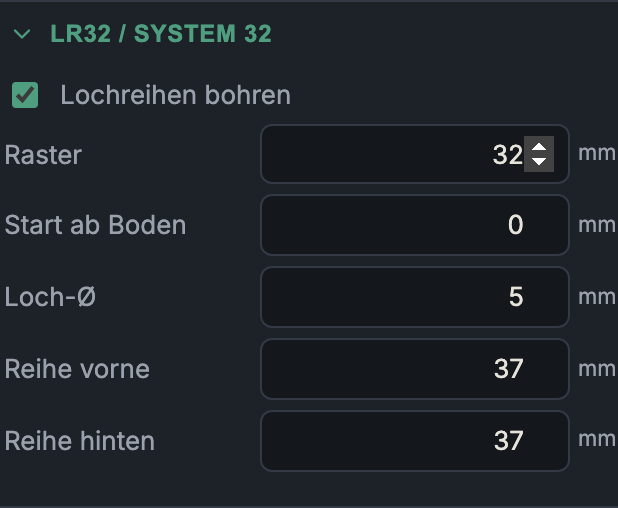
Drilling line boring
- What it does: turns on line boring in the two side panels. Only then do the following fields appear.
- When to use it: for systematically adjustable interior fittings — shelf supports at any grid height, standard-compliant hardware mounting.
- Pros & cons: full flexibility and standard compatibility (fittings fit the grid); creates many holes (visible in the machining list). Unnecessary for a carcass with only fixed shelves.
The parameters
All dimensions derive from the System 32 standard; the defaults are practical:
- Pitch (16–64 mm, default 32 mm): the vertical hole spacing — the "32" in System 32. (16 mm gives the half grid for finer adjustment.)
- Start from bottom (0–256 mm): height of the first hole above the carcass's inner bottom. This sets where the row begins at a sensible height.
- Hole Ø (3–8 mm, default 5 mm): drill diameter (standard shelf supports = 5 mm).
- Front row (20–120 mm, default 37 mm): distance of the front hole column from the front edge.
- Back row (20–120 mm, default 37 mm): distance of the back hole column from the rear edge.
The drilling depth is fixed at the practical value (13 mm). The rows begin above the bottom and end below the top, so they stay in the interior. Two columns (front/back) match the normal hardware bearing.
Front 37 mm — why?
The front distance of 37 mm is the classic System 32 convention: it puts the front hole row in the right position for hinge mounting plates and front shelf supports, and it fits into the same grid as the 37 mm edge distance of the joinery.
Next: Holes